January the 9th, 2026 | When Florence takes to the streets: a journey through tradition and spectacles with Calcio Storico Fiorentino (“Historic Florentine Football”)
Historical facts, curiosities, and traditions survive amid punches and elbows, governed by strict rules enforced by a stern referee and crowned with the most fun and delicious prize imaginable!
Have we peaked your curiosity? Here are a few more fascinating facts of the Historic Florentine Football to read right away, plus some tips on how to experience it in person next June.
Origins: from a siege to tradition
Calcio Storico Fiorentino finds its roots in ancient ball games (Sferomachia and Harpastum), but it took on a defined form during the Florentine Renaissance.
The most famous match was played on 17 February 1530 in Santa Croce Square. While Florence was under siege by imperial troops, the Florentines played a game of football as an act of defiance, demonstrating their indifference and resilience.
It later became a popular event, played even by nobles, but lost popularity in the 17th and 18th centuries, until it was revived in 1930.
Why is it called “historic” today?

Before the matches, a historical parade takes place, with participants dressed in Renaissance costumes that recreate the institutions of the Florentine Republic. It’s a moment in which Florence is more steeped in tradition than ever.
The players (the calcianti) enter the square wearing period costumes and representing the four historic districts: Whites, Light blues, Reds, and Greens. The spirit of the event celebrates identity, pride, and Florentine tenacity, recalling the resistance of 1530.
Rules of the Calcio Storico Fiorentino: between punches and liveries

The four teams represent Florence’s four historic neighborhoods:
- Whites (Bianchi) of Santo Spirito
- Light blues (Azzurri) of Santa Croce
- Reds (Rossi) of Santa Maria Novella
- Greens (Verdi) of San Giovanni
Each team is made up of 27 players, and the goal is to carry the ball into the opposing goal to score a “caccia.”
The match is played 27 vs 27 on a sand-covered field for 50 minutes, using both hands and feet. Full body contact is allowed (punches, kicks, and tackles).
Each caccia is worth one point; a shot that goes wide gives half a point to the opposing team. After each point, teams switch sides. The team with the most points wins; in the event of a tie, play continues until a winner is estabilished.
Their uniform is called “livrea”(livery), recalling the clothing worn by nobles in the 16th century.
The prize? A fun fact
One amusing historical detail is the prize traditionally awarded to the winning team: nothing less than a Chianina calf!!!
Today, the winning team receives an all-you-can-eat dinner featuring Bistecca alla Fiorentina… WHAT A DREAM!!

Useful information
Tickets for Calcio Storico Fiorentino
Tickets for the Final Match of Historic Florentine Football, held in Piazza Santa Croce every 24 June, go on sale a few days before the match and are available exclusively online at www.ticketone.it.
Prices (updated to 2025 – www.cultura.fi.it)
- €82.00 – Shaded Side Grandstand
- €53.00 – Grandstand C (Sunny Side)
- €29.00 – Colored Curves
Each person may purchase up to 4 tickets.
For information regarding access for people with disabilities, please email:
info@boxofficetoscana.it
At the time of publication of this article, details for the 2026 match are not yet available. To stay up to date on 2026 information, visit:
https://cultura.comune.fi.it/tradizioni-popolari/calcio-storico/biglietti
And after the match?
In Florence, 24 June is a full day of celebrations!
After spending the day cheering for your favorite team, would you like to relax and enjoy a dinner of traditional Florentine dishes?
If your answer is yes, then click HERE to discover where to eat in Florence and the surrounding area!
If you’re still in the mood to celebrate, don’t miss the 10:00 pm fireworks show, one of the most beautiful in Italy, locally known as the “fochi” of San Giovanni, Florence’s patron saint. The display lasts almost an hour!

Best spots to watch (and photograph) the fireworks
Ponte Santa Trinita (Santa Trinita Bridge) is the historic spot to photograph and enjoy the fireworks, offering a stunning view of Ponte Vecchio and the Lungarni (Arno’s banks), with the reflections shimmering on the Arno River.
You can also enjoy the fireworks comfortably seated at a table, sipping a glass of wine at La Sosta del Rossellino.
Or admire them from a panoramic terrace overlooking Florence while tasting Tuscan delicacies at Terrazza 45.
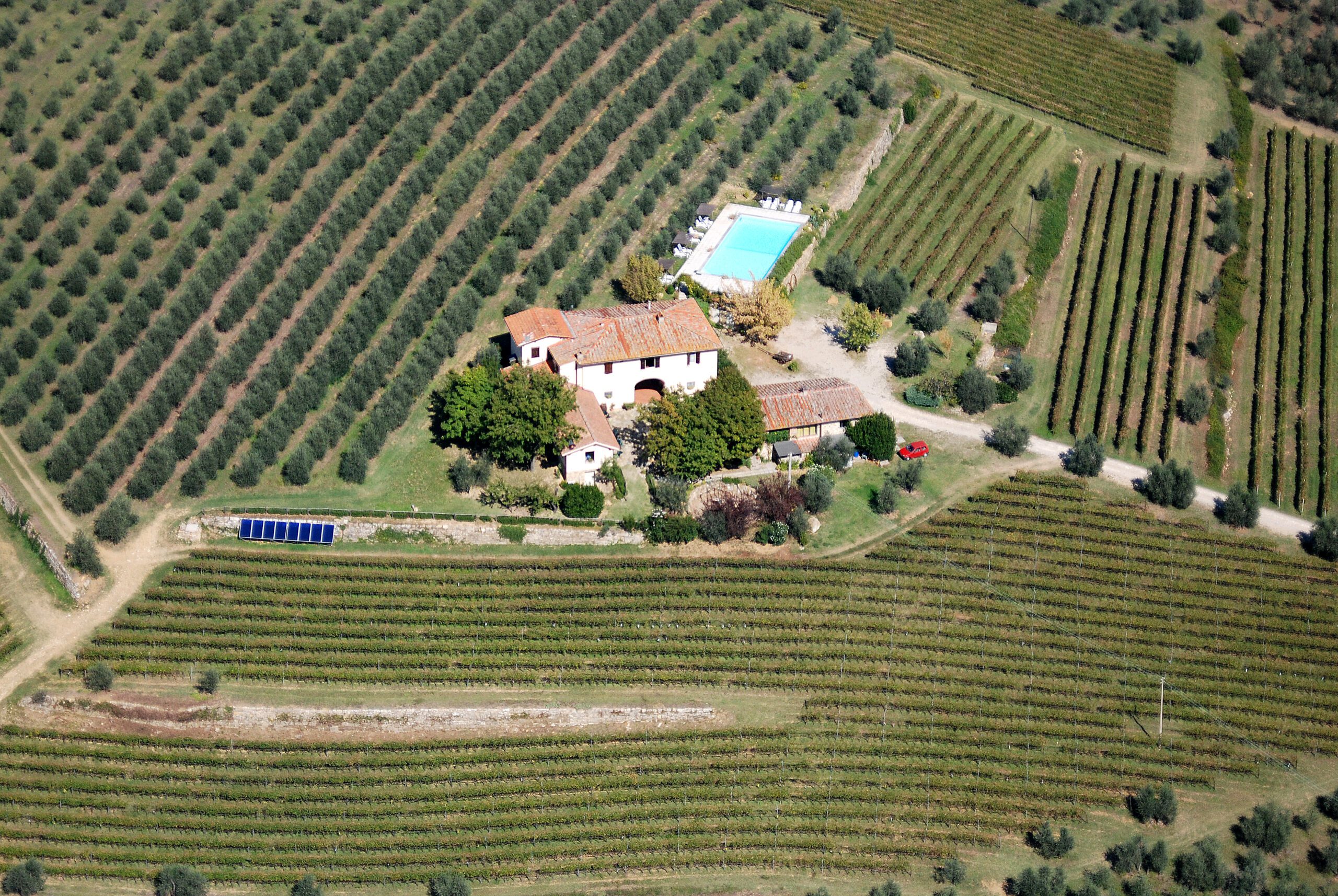
If you’re tired of driving and want to focus on your well being as well, check out our Agriturismo rooms HERE , where you’ll find a warm and peaceful environment surrounded by olive groves and vineyards, with breathtaking views of Florence and a free parking lot for your car!
How to get there
(it’s so easy from Poggiopiano!)
- Bus line 14A from Girone to Salvemini (about 30 minutes)
- Or by taxi (about 25 minutes)